
Ventilation system: Get a free quote • Fast response
Ventilation system
All buildings need a functioning ventilation system to maintain a healthy indoor climate and prevent moisture damage.
A tinsmith can help you find the best solution for your residential or commercial building. With a high level of expertise and extensive experience with different ventilation systems, the tinsmith can tailor a ventilation system that meets your needs and wishes.
Get a free quote for a ventilation system
Send us a short description of your wishes and needs, and we’ll help you find the most suited tinsmith.
Your contact information will only be used in connection with the request. Your personal data will not be disclosed to unauthorized persons.
How to get a quote for ventilation system in three simple steps:
1. Send a request
Send us a request with a short description of your wishes and needs.
All requests about ventilation system are processed as soon as possible.
2. Receive your free quote
You will receive a free and non-binding price quote from a a near you soon after your request has been sent.
Once you approve the price quote, a suitable time for performing the task is scheduled.
3. The task is performed
The tinsmith will perform the task efficiently, fulfilling your requirements to a high standard of quality.
Blikkenslag.no partners with skilled and qualified tinsmiths all across Norway.
How much does ventilation cost?
There are three different types of ventilation systems: natural ventilation, mechanical ventilation and balanced ventilation. In recent times, balanced ventilation is the most common type of ventilation system.
Natural ventilation price:
Natural ventilation is the most affordable option since it doesn’t require a lot of equipment or complex installation. Costs usually range from around NOK 5,000 to 20,000, depending on the number of vents, exhaust ducts and the size of the building.
For a standard detached house, the price is often in the region of NOK 10,000-16,000. The price includes valves, overflow valves and exhaust ducts. Natural ventilation requires little maintenance, but its effectiveness is affected by external weather conditions.
Mechanical ventilation price:
Mechanical exhaust ventilation has a higher price tag than natural ventilation due to investments in fans, ducts and control systems. The price is typically between NOK 20,000 and 70,000 but can vary depending on the size and complexity of the system.
In return, you get better control of the airflow than with natural ventilation.
Balanced ventilation price:
A balanced ventilation system costs from around NOK 40,000 for a small apartment to over NOK 150,000 for larger detached houses. The cost of a ventilation system, including installation, usually varies from around NOK 80,000 to NOK 200,000. The system consists of fans, ductwork, heat recovery units and a control system.
Energy savings are significant due to heat recovery. Balanced ventilation provides the best air quality and comfort.
Commercial ventilation systems cost:
It is impossible to predict how much it will cost to install or upgrade ventilation systems in commercial buildings. These are large projects with many variables, where the size and complexity of the assignment will have a major impact on the price, in addition to having different wishes and needs for each unique project.
The cost of a ventilation unit alone can vary from around NOK 30,000 to almost NOK 400,000.
What affects the price of ventilation systems?
- The size and design of the building
- Choice of ventilation type (natural, mechanical extraction, balanced)
- Required capacity and airflow
- Number of rooms and wet rooms to be ventilated
- Ductwork and location of the unit
- Need for fire protection of ducts
- Automation and control
- Heat recovery rate of the unit
- Adaptation to existing buildings or new builds
A tinsmith can advise you on which solutions are suitable for your building and budget.
What types of ventilation are there?
There are three main types of ventilation: natural ventilation, mechanical ventilation and balanced ventilation.
Natural ventilation is based on natural driving forces such as wind and temperature differences between inside and outside. Fresh air enters through vents in the building envelope, while stale air is exhausted through exhaust ducts. This is a simple and inexpensive ventilation solution, but it is dependent on the correct placement of vents and works best in smaller homes.
Natural ventilation offers little control over airflow and can create draughts.
Mechanical ventilation uses fans to draw used air out of the home, while fresh air enters through vents in the exterior walls. This creates a negative pressure that ensures even air exchange in all rooms. The air is extracted from wet rooms such as bathrooms and kitchens, carrying away moisture and pollutants.
The disadvantage is that the supply air is not filtered or preheated, which can lead to draughts and poor air quality at low outdoor temperatures.
Balanced ventilation has fans that ensure both the supply of fresh air and the extraction of used air in equal amounts. Fresh air is supplied to living areas such as living rooms, bedrooms and kitchens, while polluted air is extracted from wet rooms. A heat recovery unit transfers heat from the exhaust air to the cold outdoor air that is brought in, avoiding heat loss and draughts.
The air supply is filtered for dust and pollutants. Balanced ventilation provides excellent air quality and low energy consumption but requires careful planning and is more expensive than the other types of ventilation.
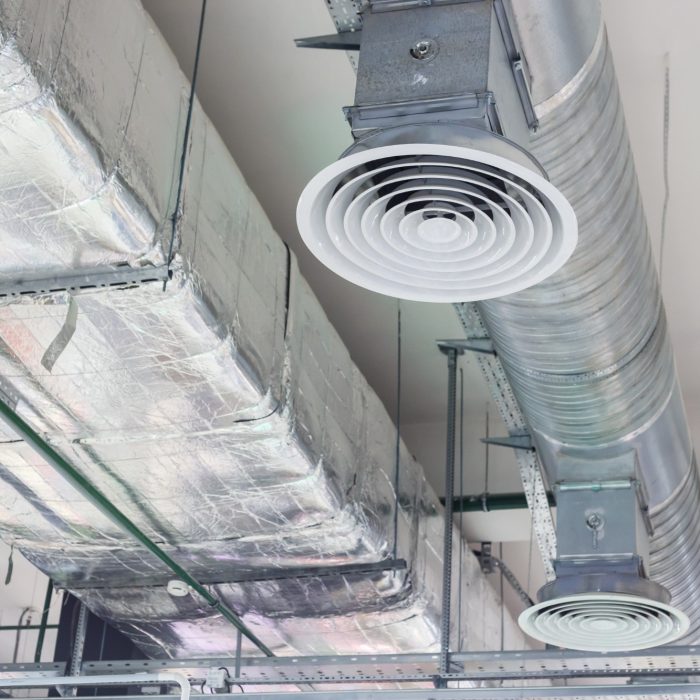
What are the requirements for ventilation?
According to the Building Regulations (TEK17), buildings must have ventilation that ensures satisfactory air quality by:
- The ventilation is adapted to the design of the rooms, intended use and pollution and moisture load.
- The air quality in the building is satisfactory with regard to odors and hazardous pollutants.
- Ventilation helps to remove moisture to prevent the formation of mold and other moisture damage.
Ventilation requirements are higher for rooms where people spend long periods of time, such as living rooms and bedrooms. For these rooms, there are requirements for fresh air supply. Ventilation requirements are also higher for wet rooms such as bathrooms, laundry rooms and kitchens due to high moisture loads.
Read more about the requirements for ventilation in homes on the website of the Norwegian Building Authority.
What are the benefits of ventilation?
1. Better indoor climate and air quality: By removing polluted air and supplying fresh air, you get a healthier indoor climate. This can reduce ailments such as headaches, fatigue, difficulty concentrating and irritated airways, which are often caused by poor air quality.
2. Reduced risk of moisture damage: Ventilation removes excess moisture from the building and prevents high humidity. This reduces the risk of mold, rot and other moisture-related damage to the building structure.
3. Less dust and allergens: The ventilation system filters the air and removes dust, pollen and other particles. This results in a cleaner indoor climate, especially beneficial for allergy sufferers and asthmatics.
4. Less odor: Ventilation removes odors and pollution from cooking fumes, smoke, chemicals and other sources. This provides a fresher indoor climate.
5. Lower energy consumption: Modern ventilation systems with heat recovery significantly reduce energy consumption for heating. Ventilation heat can cover large parts of the home’s heating needs.
How much energy does balanced ventilation save?
Balanced ventilation with heat recovery can save a lot of energy compared to natural or mechanical exhaust ventilation. The heat exchanger recovers 80-95% of the energy in the exhaust air and transfers it to the air supply.
This reduces the heating requirement considerably.
For a detached house, you can typically save 4000-7000 kWh per year with balanced ventilation. For an apartment, the savings are typically 1500-3000 kWh.
The size of the savings depends on the size of the building, the degree of insulation and location. Combined with an air-to-air heat pump, the savings can be even greater.
Can you have a heat pump and balanced ventilation?
It is entirely possible and very beneficial to combine a heat pump and balanced ventilation. An air-to-air heat pump goes well with balanced ventilation.
The heat pump provides energy-efficient heating, while the ventilation provides good air quality and low moisture levels.
It is important that the ventilation system and the heat pump are adapted and regulated in relation to each other. The heat pump should not be placed too close to supply air or exhaust air vents.
Otherwise, the systems work well together and provide both good comfort and low energy consumption. The combination of balanced ventilation and air-to-air heat pumps can provide an affordable and energy-efficient solution, especially in renovation projects.
Get a quote for ventilation
We work with tinsmiths all over the country who have extensive experience of different ventilation systems. Instead of contacting different companies and spending a lot of time researching references, prices, reputation, etc., you can take advantage of our free and non-binding service.
Fill in the form on our website with some information about your needs and wishes. We will then forward your enquiry to a tinsmith in your local area who can deliver what you are looking for.
This will typically be a tinsmith who has extensive experience with a similar system to the one you’re looking for, a good reputation and, not least, competitive prices.